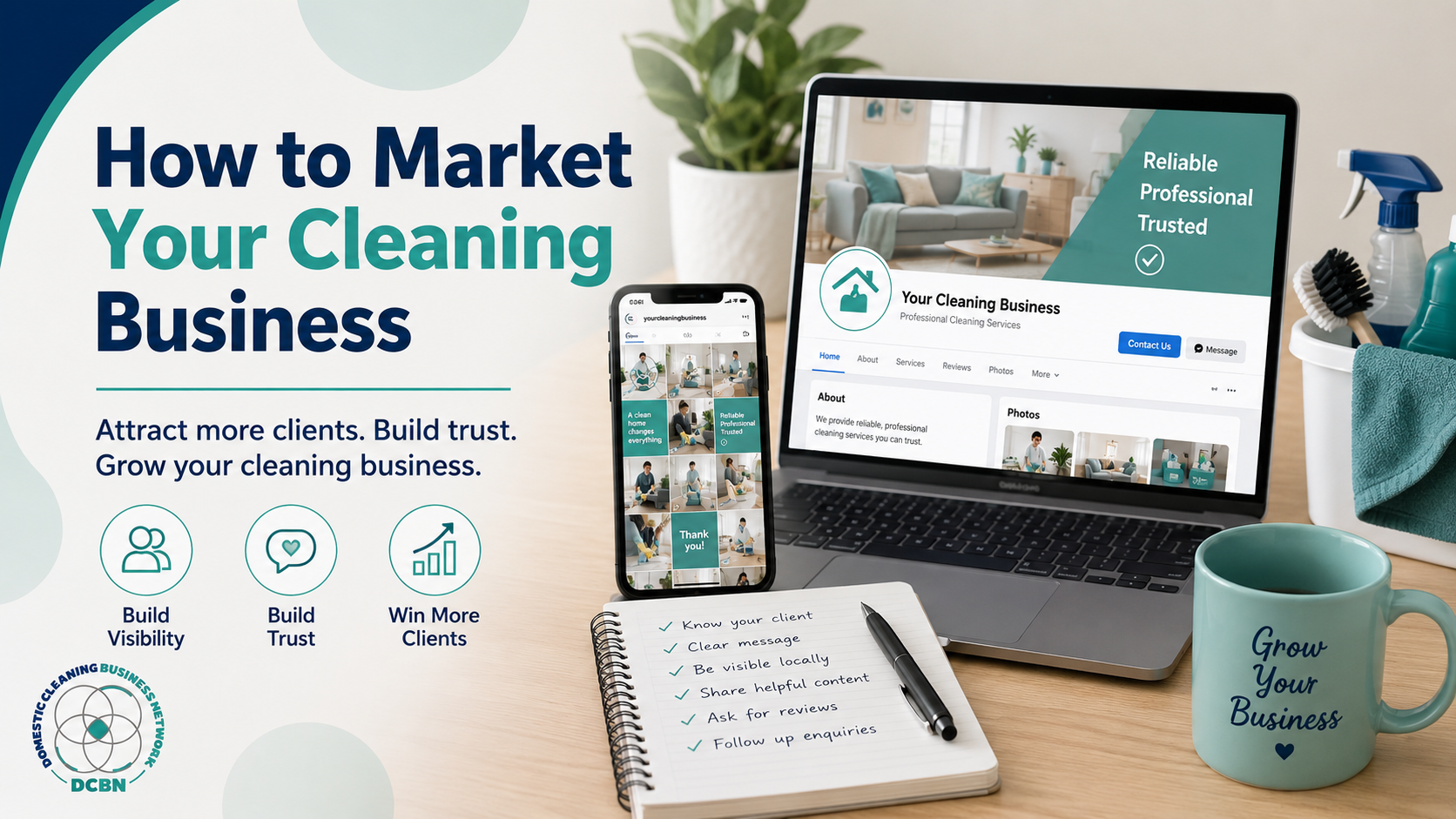


Discover practical ways to market your domestic cleaning business, generate local enquiries and attract clients who value a professional service.
When enquiries slow down, many cleaning business owners immediately think they need to post more on social media. They create a few graphics, share a last-minute availability post and hope somebody books. Sometimes it works. Often it does not. Marketing a domestic cleaning business is not about posting constantly or chasing the latest social media trend. It is about making sure the right local people can find you, understand what you offer and trust you enough to make contact. That requires more than one Facebook post.
Start with the client you actually want
“Anybody who needs a cleaner” is not a clear target market. A busy professional looking for a fully managed weekly service may value reliability, easy communication and consistent standards. An older client may be more concerned about trust, continuity and having somebody who understands their home. A landlord may prioritise fast turnaround and clear invoicing. These customers have different concerns and respond to different messages. Think about your best existing clients:
- Where do they live?
- What type of service do they book?
- What problem were they trying to solve?
- Why did they choose your company?
- What nearly stopped them booking?
- What do they value most now?
Your marketing becomes easier when you understand the person you are speaking to.
Do not market cleaning; market the result
Most clients already understand what a cleaner does. They do not need to be told that you dust, vacuum and clean bathrooms. They need to understand how using your service will improve their life. The result might be:
- Coming home without facing another list of jobs
- Having more time with their family
- Feeling comfortable inviting people over
- Reducing arguments about housework
- Supporting an older relative
- Keeping on top of a demanding home
- Enjoying weekends without spending them cleaning
The cleaning matters, but the emotional benefit often drives the decision. Compare these two messages:
“We offer weekly and fortnightly domestic cleaning.”
“Come home to a house that feels calm, clean and ready to enjoy.”
The first explains the service. The second helps the client imagine the outcome. You need both.
Make trust central to your marketing
Inviting somebody into your home requires trust. Potential clients may be wondering:
- Who will have access to my property?
- Are the cleaners vetted?
- Is the company insured?
- What happens if my regular cleaner is away?
- Will I have the same person each time?
- What if something is damaged?
- Can I rely on the company to turn up?
- How do I raise a concern?
Your website and social media should answer these questions before the client needs to ask. Share information about your training, insurance, checks, quality processes and team support. Introduce the people behind the business. Explain how your service works. Do not simply say you are trustworthy. Show the structures that make your service dependable.
Your website needs to do more than look attractive
A beautiful website is not helpful if visitors cannot quickly understand what you offer. Your homepage should make the following clear:
- What service you provide
- The areas you cover
- Who the service is for
- Why clients should choose you
- How to request a quote
Create separate pages for your main services and locations where appropriate. A potential client searching for a domestic cleaner in a specific town needs to see that you genuinely cover their area. Include real information rather than filling pages with generic statements such as “We pride ourselves on excellent customer service.” What does excellent service mean in your company? Explain it.
Build your local Google presence
Many people searching for a cleaner will use Google rather than social media. Your Google Business Profile should be complete and regularly reviewed. Use accurate contact information, opening details, service areas, photographs and a clear description of the business. Client reviews are particularly important. Do not wait and hope that happy clients remember to leave one. Create a simple, polite review request and make it part of your client journey. You might request a review:
- After the first few successful visits
- Following positive feedback
- At a scheduled client check-in
- When a client recommends you to somebody else
- After resolving a problem successfully
Always respond professionally to reviews, including the occasional negative one.
Use social media to build familiarity
Most people who see one post will not immediately book.
They may follow your page, notice your vans, read a review and then contact you several weeks later.
Consistency creates familiarity, and familiarity supports trust.
Your content can include:
- Client feedback
- Introductions to team members
- Cleaning tips
- Behind-the-scenes training
- Local community involvement
- Answers to common questions
- Availability updates
- Explanations of how your service works
- Before-and-after results, with permission
- Reasons clients use your company
Not every post needs to sell directly.
A useful question to ask is: “Will this help a potential client know, like or trust us?”
Do not depend on one source of enquiries
If all your clients come from one Facebook group, one paid advert or one recommendation partner, your lead flow is vulnerable. A healthier marketing approach may include:
- Google search
- Google Business Profile
- Client recommendations
- Social media
- Local partnerships
- Community groups
- Leaflets in carefully selected areas
- Vehicle branding
- Local networking
- Email follow-up
- Estate agents or relocation contacts
- Connections with complementary businesses
Track where enquiries come from and, more importantly, which sources produce the best clients. A channel that generates twenty unsuitable enquiries may be less valuable than one that generates three ideal clients.
Follow up enquiries properly
Cleaning companies lose potential clients every week because follow-up is inconsistent. An enquiry arrives while you are managing a sickness absence or dealing with a client complaint. You intend to reply later, but the message gets buried. Create a clear enquiry process. It should cover:
- How quickly the initial response is sent
- What information you need
- How quotes or home visits are arranged
- When the quote is followed up
- How the prospect books
- What happens after they accept
Following up does not need to feel pushy. A brief message asking whether they have any questions may be enough to restart a conversation.
Avoid competing only on price
Price-focused marketing tends to attract price-focused clients. Discounts can sometimes support a specific campaign, but constantly promoting cheap cleans can make it difficult to communicate the value of a professional service later. Instead, market the difference between simply hiring somebody to clean and choosing a properly managed cleaning company. Talk about reliability, training, communication, cover, standards and peace of mind. You are not selling hours of cleaning. You are selling a service the client can depend on.
Marketing becomes easier with a plan
One of the reasons marketing feels overwhelming is that owners approach it reactively. They market heavily when the diary has gaps, become busy, stop marketing and then panic when enquiries fall again. A simple ongoing plan is more effective. Choose a manageable number of activities and repeat them consistently. Review the results monthly rather than abandoning an approach after one week. DCBN members have access to practical marketing training, masterclasses, templates and support from other cleaning business owners. The resource library covers topics including social media, local lead generation, client journeys, reviews, referrals and business growth. Members can also use the weekly masterminds and mentoring support to discuss what is and is not working in their own area. You do not need to be everywhere. You need to be visible in the right places, with a clear message, often enough for local clients to remember and trust you.
Next Steps
DCBN helps domestic cleaning business owners market their services with more confidence and consistency. Access practical training, resources and support designed for the realities of running a cleaning company.
dcbn.org.uk/join-us/
Also, check out this fantastic e-book on Marketing in our online shop: Clean Profits – Marketing Success for Cleaning Business Owners
Cleaning business marketing
How to get more cleaning clients
Local marketing for cleaners
Domestic cleaning leads
Social media for cleaning businesses