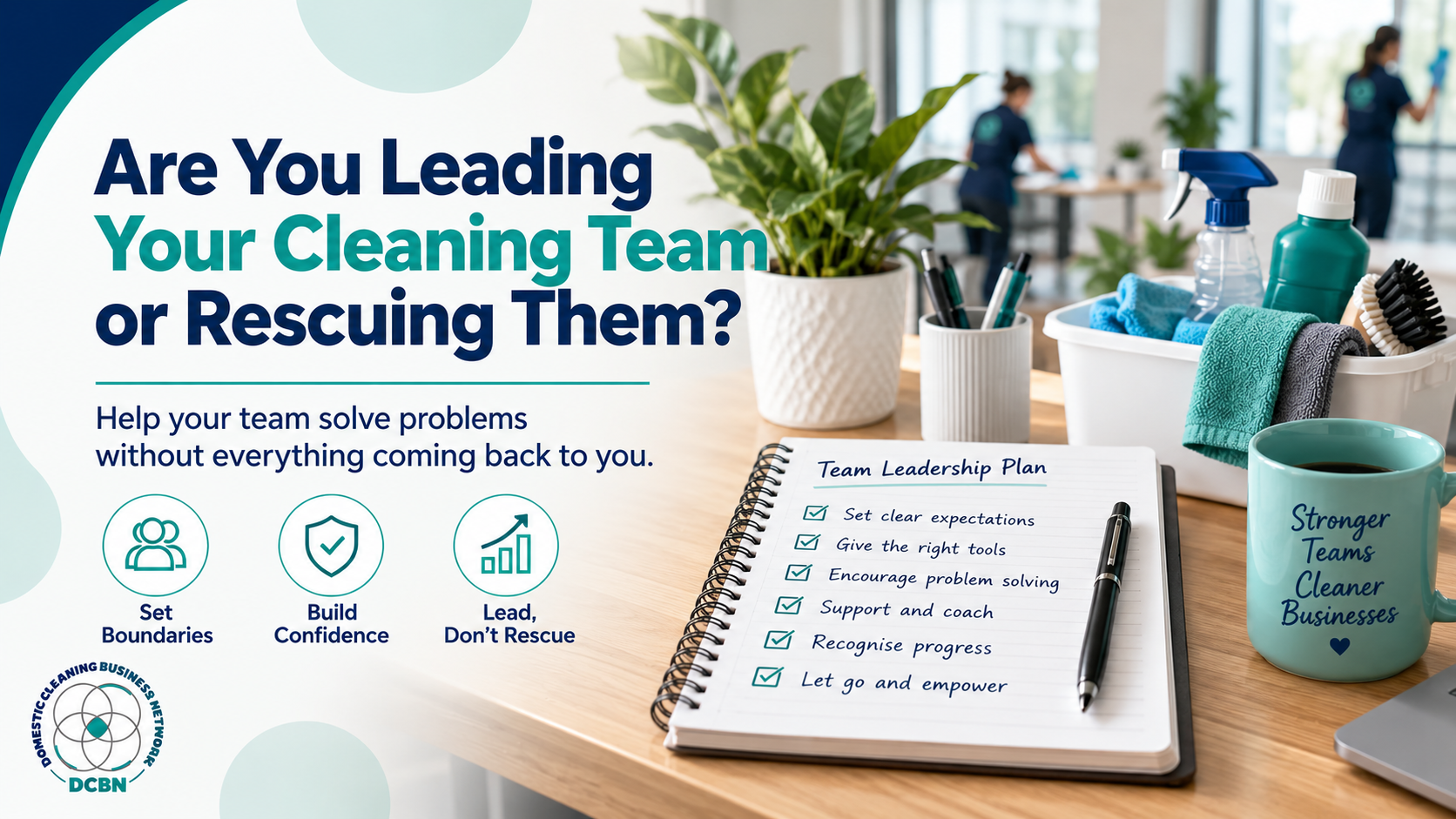


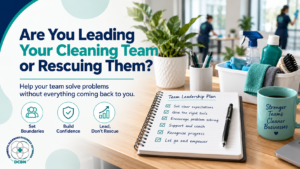
One of the hardest transitions when you grow a team is learning the difference between leading and rescuing.
They can look very similar. A member of staff rings you with a problem. A client is unhappy. Someone is running late. A cleaner has called in sick. Your immediate response is, “Don’t worry, I’ll sort it.”
It feels helpful and supportive, but if you do it every time, you may be training your team to bring every problem straight back to you.
The Fastest Solution Is Not Always the Best One
Cleaning business owners often solve problems because they can do it quickly. You know the customers, you know the business and you know what should happen, so it is easier to take over.
The problem is that when you always provide the answer, your team never learns how to find it themselves. They begin to learn that when something goes wrong, the safest thing to do is ask you.
Over time, this creates dependency and can leave the business owner feeling permanently interrupted.
Ask a Different Question
Sometimes the most useful thing you can ask is: “What do you think we should do?”
That simple question changes the conversation. Instead of taking ownership of the problem, you are asking the other person to think.
Often they already know the answer. They may simply want reassurance. If their proposed solution is sensible, you can confirm it and let them act.
The next time the same thing happens, they may not need you at all.
Create Clear Boundaries
Of course, you do not want staff making every decision themselves. Some things should always be escalated.
The key is making the boundaries clear. Perhaps a team leader can contact a customer to say the cleaner is running late, rearrange certain jobs or resolve a straightforward access problem, while complaints, refunds, pricing decisions or serious HR matters still come back to management.
People make better decisions when they understand what they are authorised to do.
Stop Answering Questions That Already Have Answers
Another useful habit is to direct people back to the process instead of simply giving them the answer.
If somebody asks what to do when they are sick, ask whether they have checked the absence procedure. If they ask about customer access, direct them to the client notes. If they ask what happens after a complaint, ask them to check the complaints process.
This reinforces the idea that the business has systems and that the owner is not the system.
Let People Build Confidence
If you want people to make decisions, you also have to allow them to learn. That sometimes means they will handle something slightly differently from you, and they may even make a small mistake.
The answer is not always to take the responsibility back. Instead, review what happened, what worked, what they would do differently next time and whether the process needs improving.
That is how people develop.
Leadership Changes as the Business Grows
When you work alone, your job is to do the work. When you start growing a team, your role begins to change.
Eventually your job is not to solve every problem. It is to build a team and systems that can solve many of those problems without you.
That is a big shift, but it is one that makes growth much more sustainable.
Inside the DCBN, team management is one of the topics that comes up again and again in masterminds and member discussions. Managing people can feel lonely when you are trying to work everything out yourself, and sharing experiences with other cleaning business owners can make a huge difference.