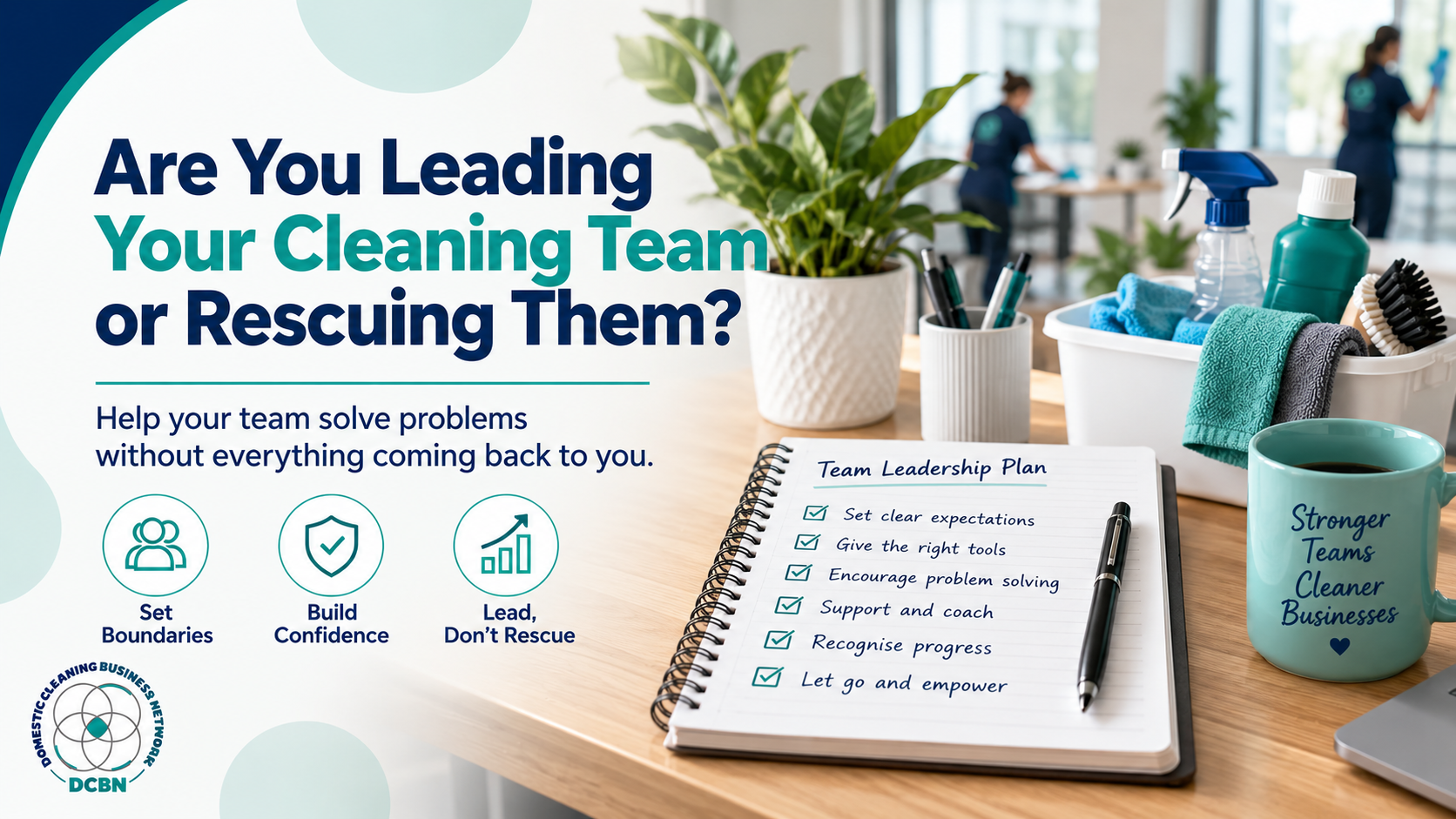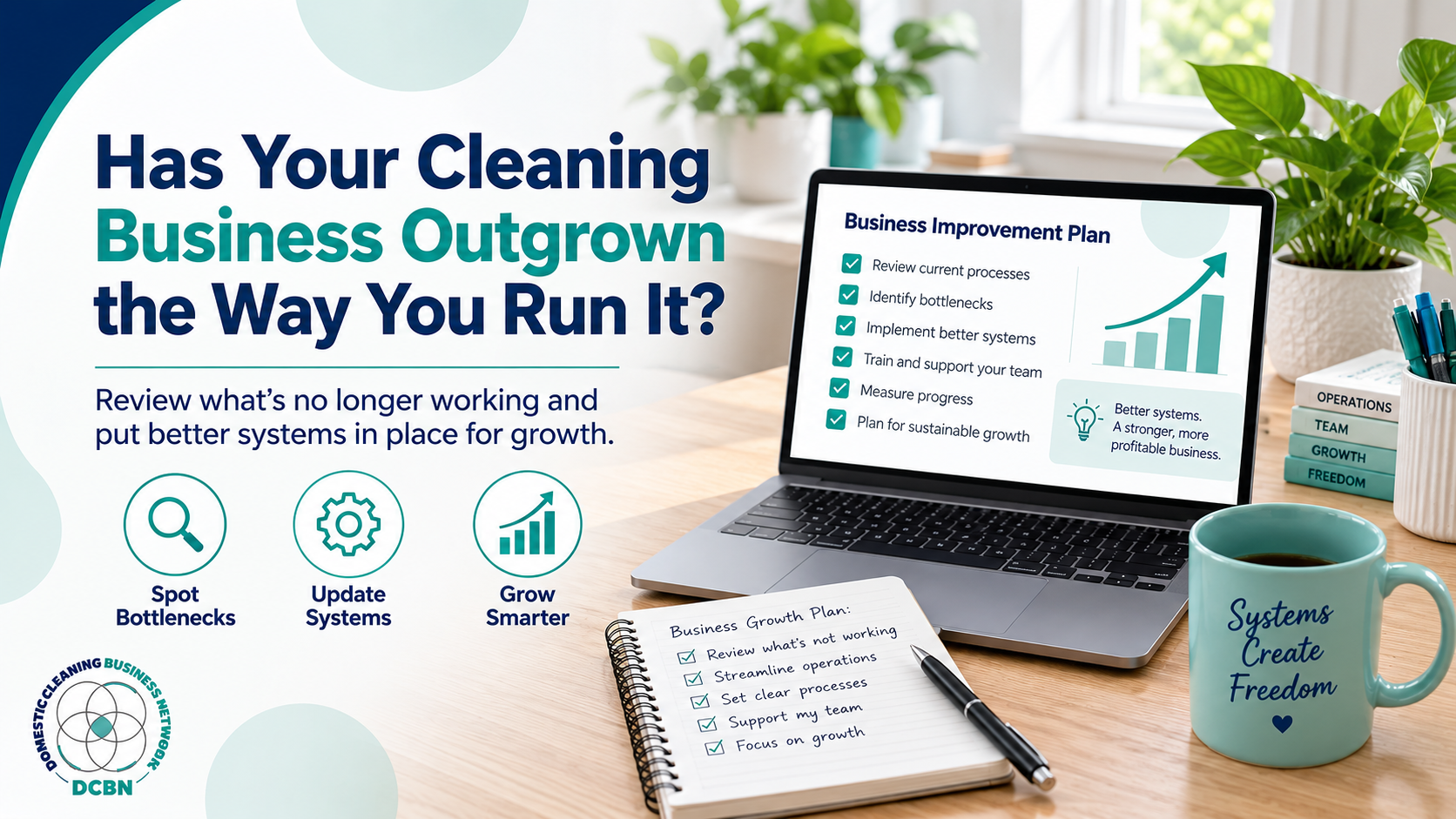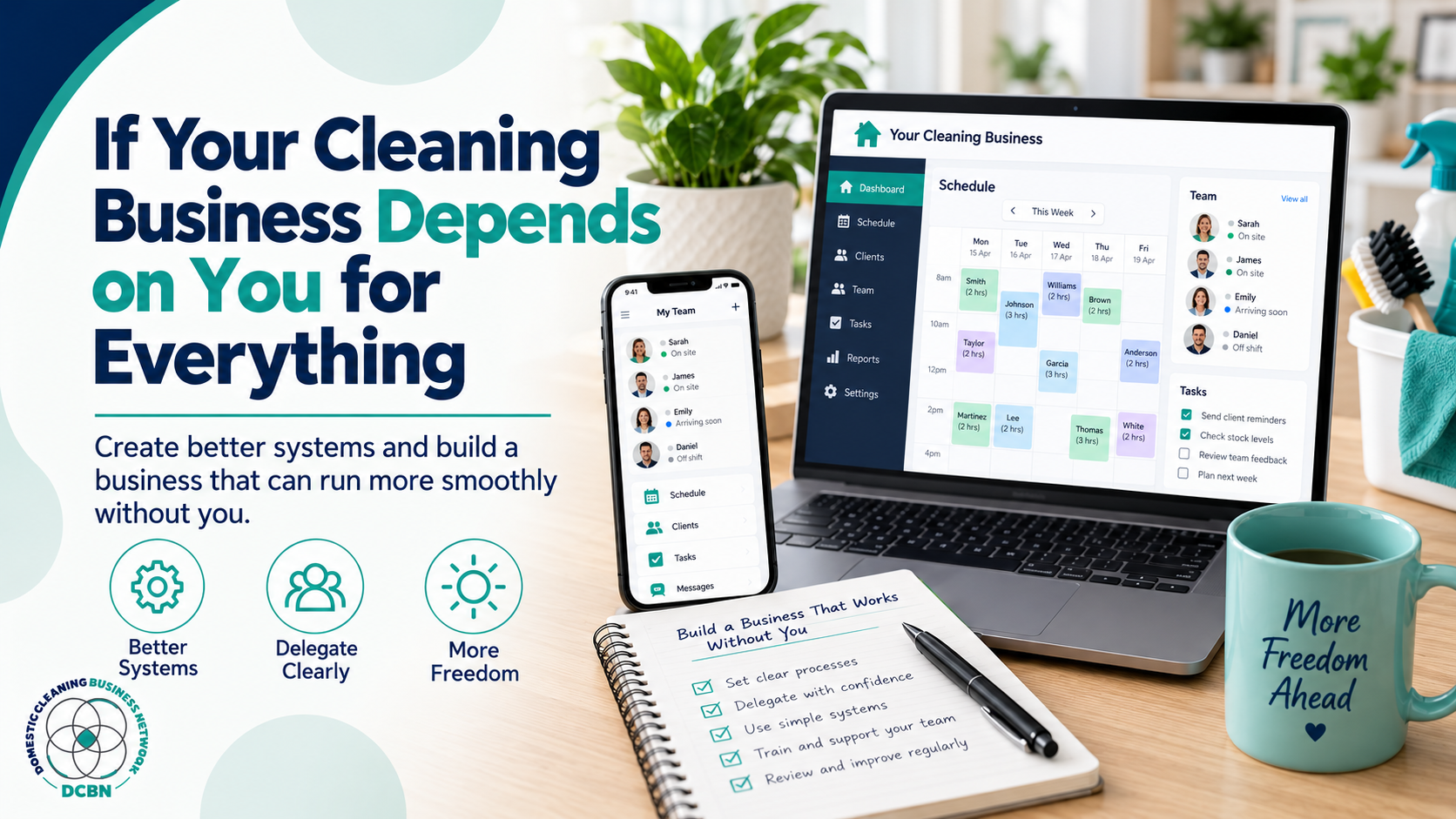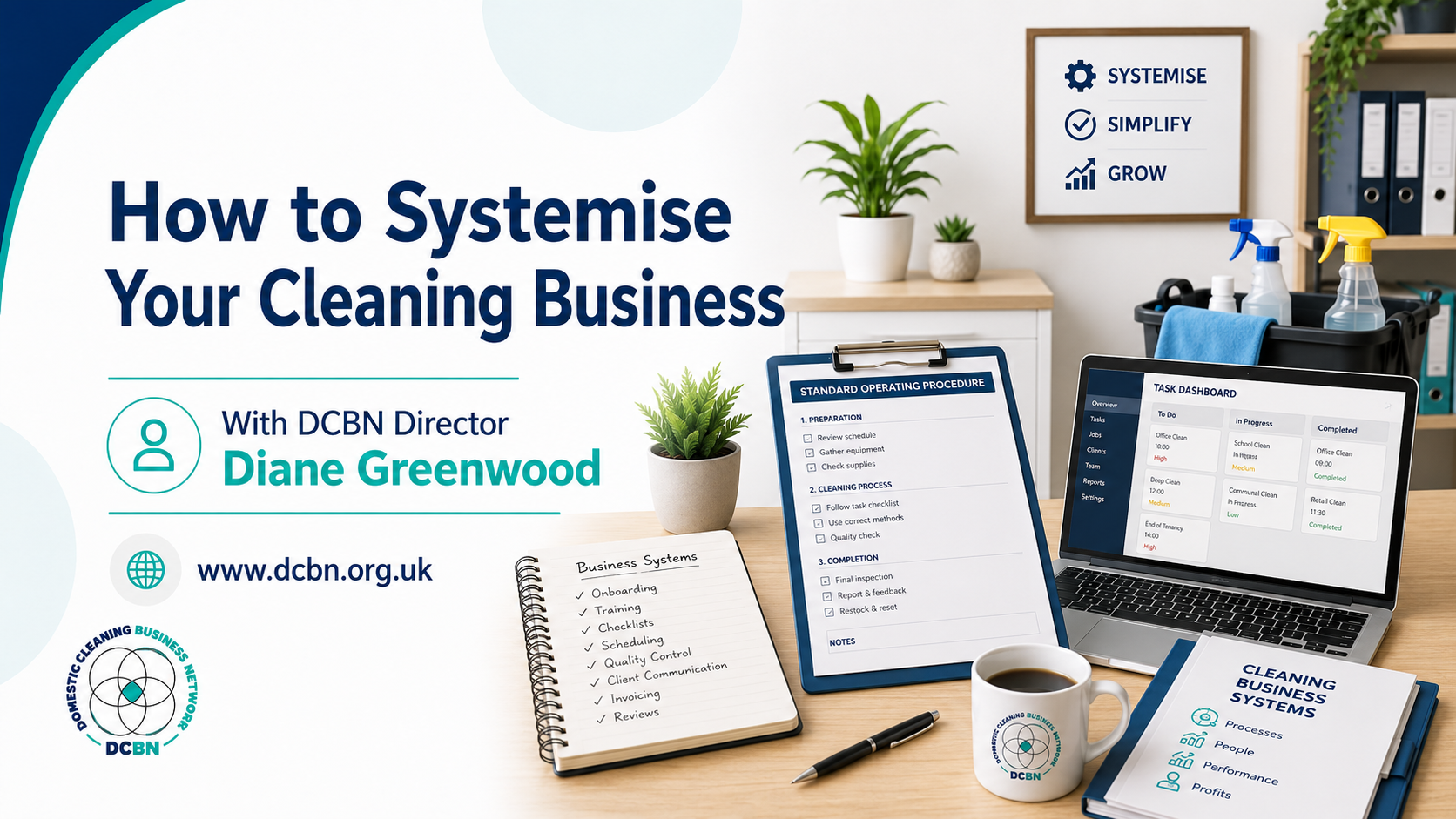


Learn how to move from cleaner to confident business leader, manage your team effectively, delegate well and build a stronger cleaning business
Making the move from cleaner to business leader is one of the biggest changes you will experience as your cleaning company grows. You may have started out doing every clean yourself, building your reputation through hard work, reliability and attention to detail. As more clients come on board and you begin recruiting staff, your role changes. You are no longer responsible only for the standard of your own work. You are now responsible for guiding a team, setting expectations, solving problems and creating a business that can operate without you being involved in every clean. That transition can feel exciting, but it can also be uncomfortable. Being an excellent cleaner does not automatically make somebody a confident manager. Leadership is a different skill, and like any other part of running a business, it can be learned.
What does good leadership look like in a cleaning business?
Cleaning business leadership is about far more than giving instructions or checking that jobs have been completed. A strong leader creates clarity, builds trust and helps people understand what is expected of them. They support their team while also holding them accountable for their work. The best cleaning business owners often remember what it was like to work on the frontline. They understand the physical demands of cleaning, the pressure of travelling between clients and the challenges of working inside somebody else’s home. That understanding matters. But good leadership also means making decisions that protect the business, the client and the wider team. Being a supportive boss does not mean avoiding difficult conversations. It means handling them fairly, clearly and consistently.
Lead by example
Your team will pay attention to what you do, not only what you say. If you expect cleaners to arrive on time, communicate professionally and follow company procedures, you need to demonstrate those same standards. This includes:
- Responding respectfully when problems arise
- Following your own policies
- Keeping promises
- Taking responsibility for mistakes
- Remaining calm under pressure
- Treating clients and staff consistently
Leading by example helps build credibility. Your staff are more likely to respect your expectations when they can see that you apply the same professional standards to yourself.
Communicate clearly with your cleaning team
Poor communication is one of the most common causes of frustration inside a cleaning business. Team members cannot meet expectations they do not fully understand. Vague instructions such as “do a better job” or “be more careful” rarely lead to lasting improvement. Be clear about:
- Cleaning standards
- Timekeeping
- Reporting sickness or absence
- Client communication
- Uniform and presentation
- What is included in each service
- How problems should be reported
- Who is responsible for making decisions
Regular team check-ins can help prevent small concerns from becoming bigger problems. These do not always need to be formal meetings. A quick telephone call, message or short catch-up can be enough to keep communication open. Encourage your team to raise concerns, ask questions and offer feedback. People are more likely to stay engaged when they feel listened to. However, being approachable does not mean being available every hour of the day. Clear communication boundaries are also part of good management.
Learn how to delegate without losing control
Delegation is often one of the hardest skills for cleaning business owners to develop. When you have built the business yourself, it can feel easier and quicker to continue handling everything. You may worry that nobody else will complete the task properly, or that standards will slip if you step back. But holding onto every decision eventually creates a bottleneck. Effective delegation means giving somebody:
- A clearly defined responsibility
- The information and training they need
- Permission to make agreed decisions
- A deadline or expected outcome
- A way to ask for help when necessary
Delegation is not simply handing over a task and hoping for the best. It requires clear systems, training and follow-up. Start with recurring tasks that do not need your personal involvement. This might include stock checks, quality-control visits, new-starter administration or responding to routine client queries. Every task you successfully delegate gives you more time to focus on leading and growing the business.
Avoid micromanaging your staff
There is a difference between maintaining standards and controlling every detail. Micromanagement can make employees feel as though they are not trusted. It can also prevent them from developing confidence and problem-solving skills. Instead of checking constantly, create clear processes and agreed review points. For example, rather than messaging a team leader throughout the day, agree what they are responsible for, when they should update you and which situations need to be escalated. Your team may not always complete a task in exactly the same way you would. The important question is whether they achieve the correct result while following company standards.
Invest in cleaning staff training and development
Training should not stop after a cleaner’s first week. Regular training helps protect standards, improve confidence and reduce the number of problems that reach the business owner. Useful training topics may include:
- Cleaning techniques
- Product safety
- COSHH procedures
- Client communication
- Time management
- Quality control
- Handling complaints
- Key and alarm security
- Team leadership
- Reporting damage or concerns
Development can also include giving experienced cleaners opportunities to take on more responsibility. A strong cleaner may be able to support new starters, carry out spot checks or progress into a team leader role. Creating a pathway for development can improve retention because people can see that their role has room to grow.
Give feedback before problems build up
Many business owners delay difficult conversations because they do not want to upset somebody. Unfortunately, avoiding feedback usually allows the same issue to continue. Good feedback should be:
- Prompt
- Specific
- Calm
- Fair
- Focused on the required improvement
Instead of saying, “The client was unhappy,” explain exactly what was missed, what the expected standard is and what needs to happen next time. Feedback should not only be negative. Let people know when they have handled a difficult client well, supported a colleague or consistently delivered excellent work. When feedback becomes a normal part of working in the business, it feels less threatening and more useful.
Recognise and appreciate good work
Cleaning can be physically demanding and is often completed without the business owner being present. That makes recognition especially important. A sincere thank you, a positive message or a mention during a team meeting can have a real impact. You could also share good client feedback directly with the cleaner responsible. Recognition helps reinforce the behaviours you want to see, including reliability, teamwork, attention to detail and excellent client care. It also contributes to a workplace where people feel noticed rather than taken for granted.
Be consistent when managing your cleaning team
Inconsistent management causes confusion and resentment. If one team member is allowed to ignore a rule while another is challenged for the same behaviour, people quickly notice. Policies should be applied fairly, including those covering:
- Attendance
- Timekeeping
- Holiday requests
- Client complaints
- Uniform
- Quality standards
- Communication
- Use of company equipment
Consistency does not mean ignoring individual circumstances. It means making decisions through a clear and fair process rather than reacting differently depending on your mood or relationship with the employee.
Stop trying to be everybody’s friend
It is natural to want your staff to like you. But your main responsibility is to lead the business fairly and professionally. Trying to avoid every disagreement can lead to unclear boundaries, poor performance and growing frustration. You may end up feeling resentful because you have said yes to things that are not reasonable or sustainable. You can be warm, approachable and supportive while still being clear about expectations. Respect is more important than popularity.
Build systems that support your leadership
Strong leadership becomes much easier when the business has clear systems. Without systems, you are forced to make the same decisions repeatedly. Staff come directly to you because there is no agreed process to follow. Useful systems might include:
- New-starter induction checklists
- Cleaning standards and task lists
- Absence reporting procedures
- Client complaint processes
- Quality-control forms
- Team leader responsibilities
- Training records
- Staff handbooks
- Communication guidelines
These tools help your team work more independently and give you a fair, consistent framework for managing people.
Moving from cleaner to leader takes time
You are unlikely to feel like a confident leader overnight. There will be conversations you find difficult, tasks you delegate too slowly and decisions you later wish you had handled differently. That does not mean you are failing. Leadership develops through experience, reflection and support. The important thing is to recognise that your role must change as the business grows. Your job is no longer to personally complete every clean or solve every small problem. Your job is to create the standards, systems and culture that help other people perform well.
Get support with cleaning business leadership
Running a cleaning company can feel lonely, particularly when you are managing staff issues that you cannot discuss openly with your team. DCBN gives cleaning business owners access to practical training, templates, mentoring and support from others who understand the realities of managing a domestic cleaning team. Members can access resources covering recruitment, onboarding, team leadership, communication, quality control, systems and managing performance. The weekly masterminds also provide a space to discuss challenges and learn from other business owners. Becoming a better leader does not mean having every answer. It means being willing to learn, communicate clearly and build a business where both you and your team can succeed.
Next Steps
Ready to become a more confident cleaning business leader? DCBN membership gives you practical training, templates, 121 mentoring and support designed specifically for domestic cleaning business owners.
FREE DOWNLOAD HERE: From Mop to Management – a 5 Step Plan!
How to manage a cleaning team
Leadership skills for cleaning business owners
From cleaner to manager
Managing cleaning staff
How to be a good cleaning business owner